

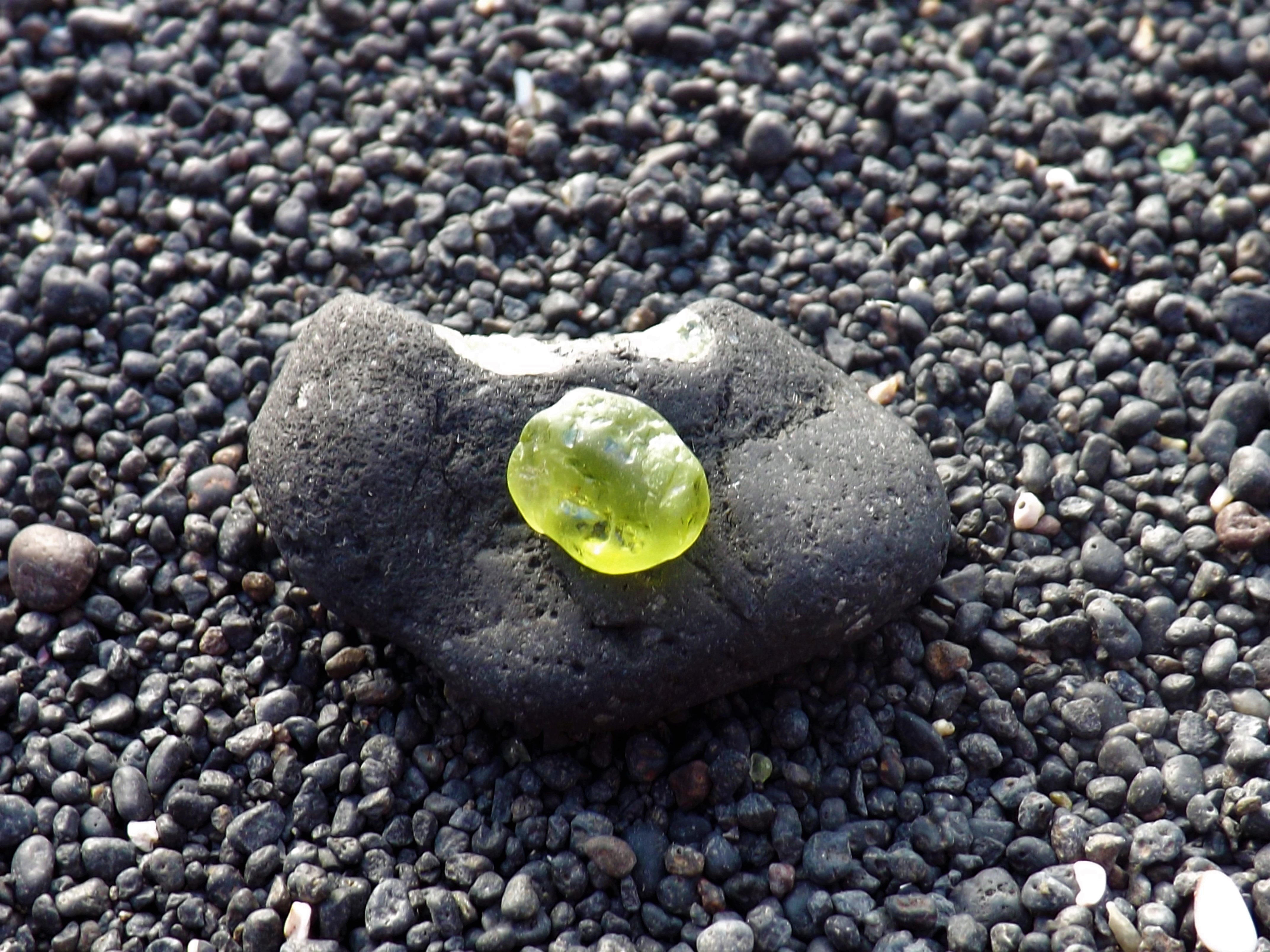
As a dedicated beachcomber, hunting for the semi precious stone Olivine was high on my list of ‘must-do’ activities in Lanzarote. Olivine is the birthstone for August. It is also known as peridot and the poor mans emerald. The El Golfo region of Lanzarote, only twenty minutes from where we were staying, is famed for the huge chunks of this green gemstone that are hidden within the black basalt.
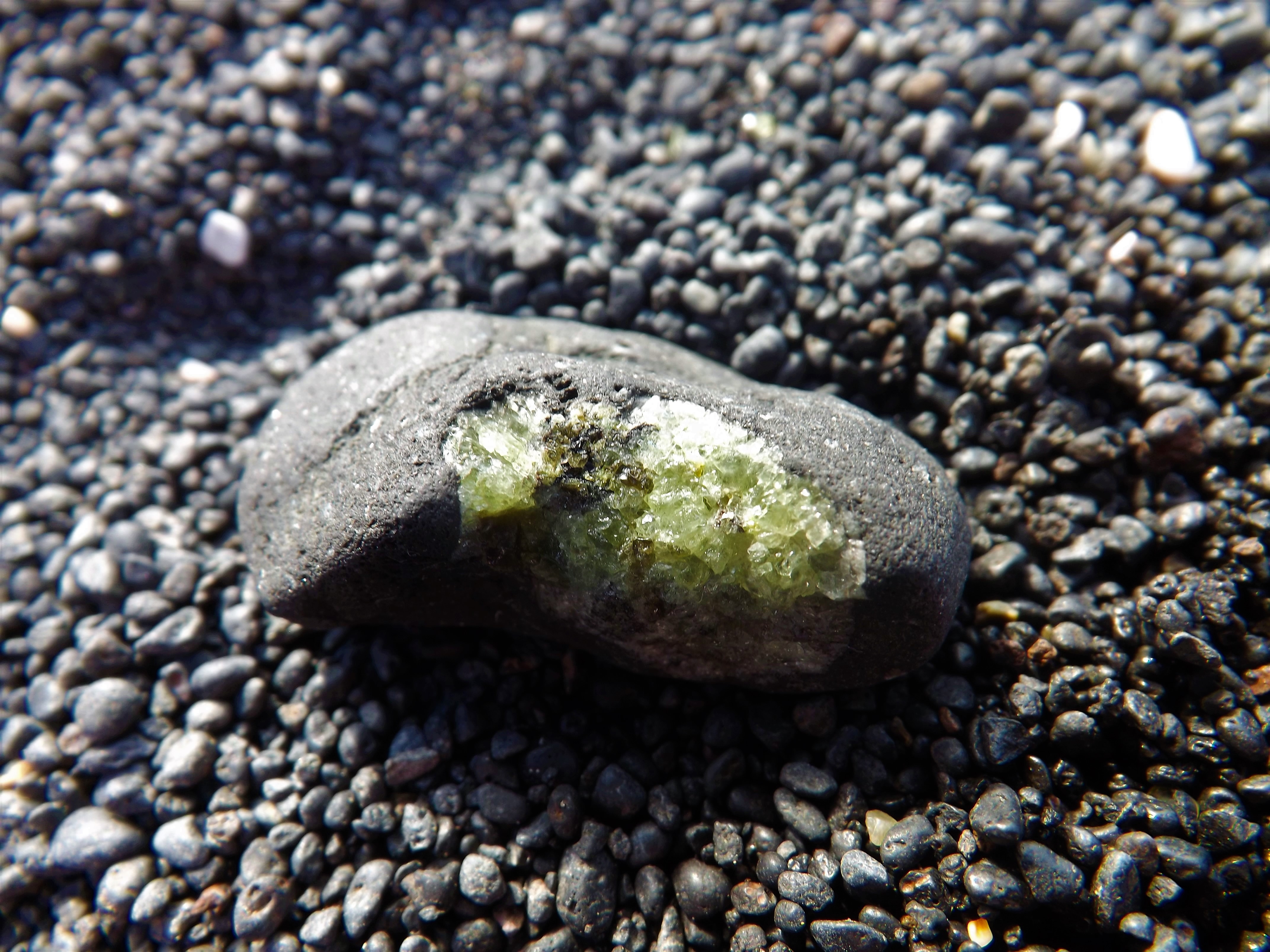
Years of erosion mean that the black sandy beaches in this region often glisten in the sunshine with particles of the green gem, ranging in size from a speck of dust to a grain of rice. Olivine, which gets it’s name from is deep olive green colour, is a common mineral in the earths substrate and once on the earths surface it weathers quickly, .
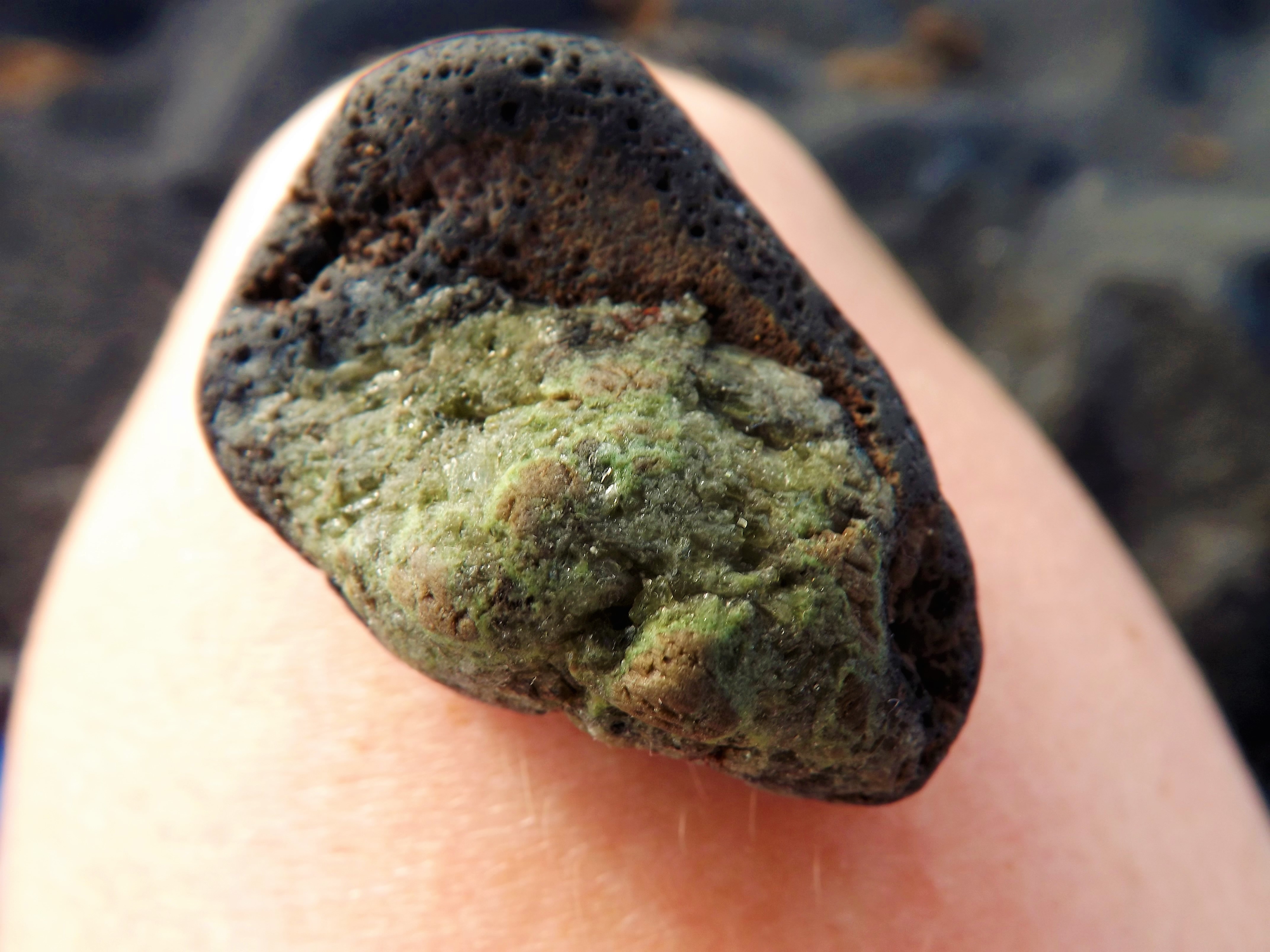
The Olivine found in this region of Lanzarote is apparently Mg-rich and is one of the most common types in the world. It is rumoured that Mg-rich Olivine also has extraterrestrial links! Apparently it has been found in meteorites, on the Moon and on Mars, I will leave it up to you to research that one!
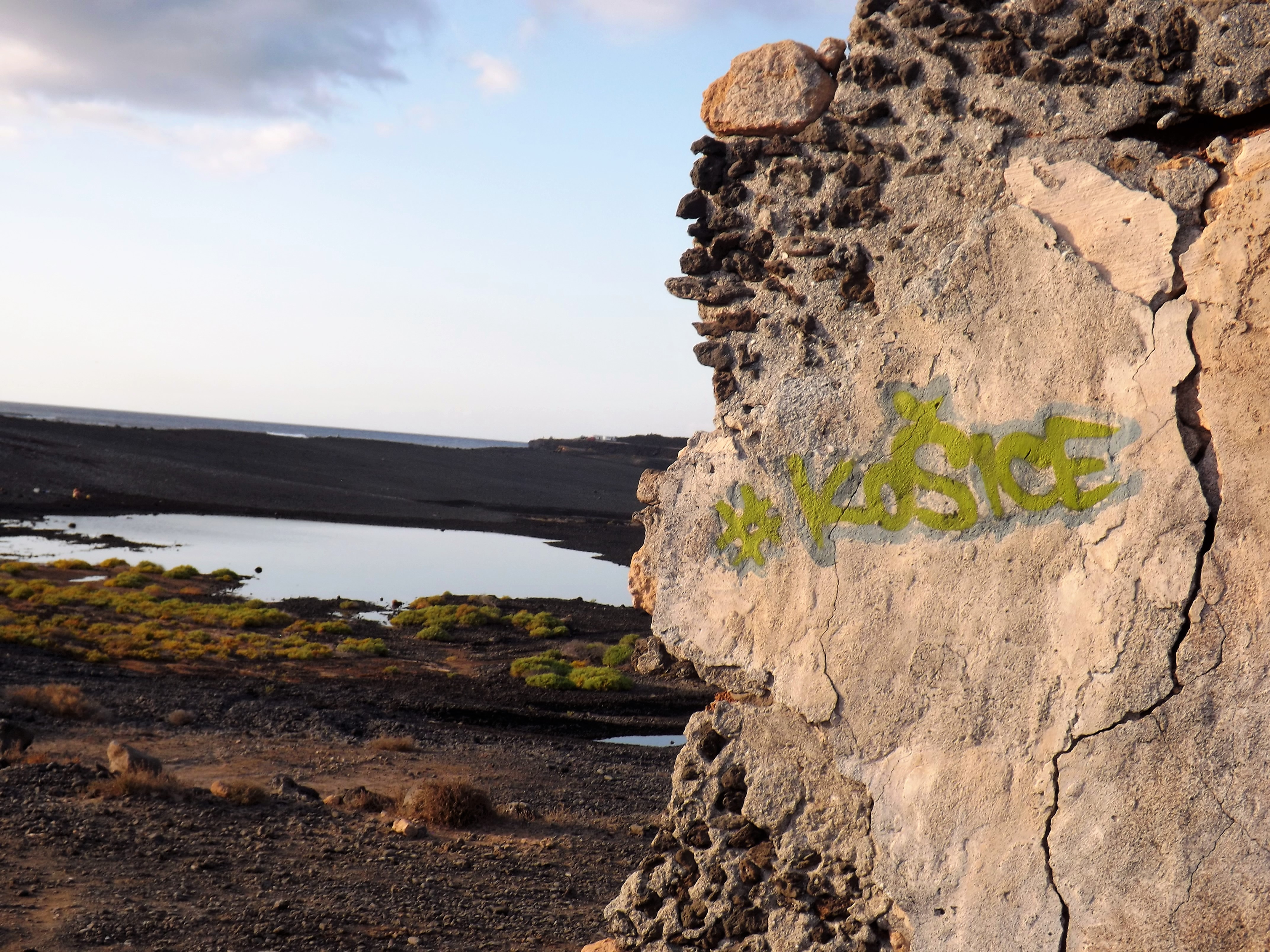
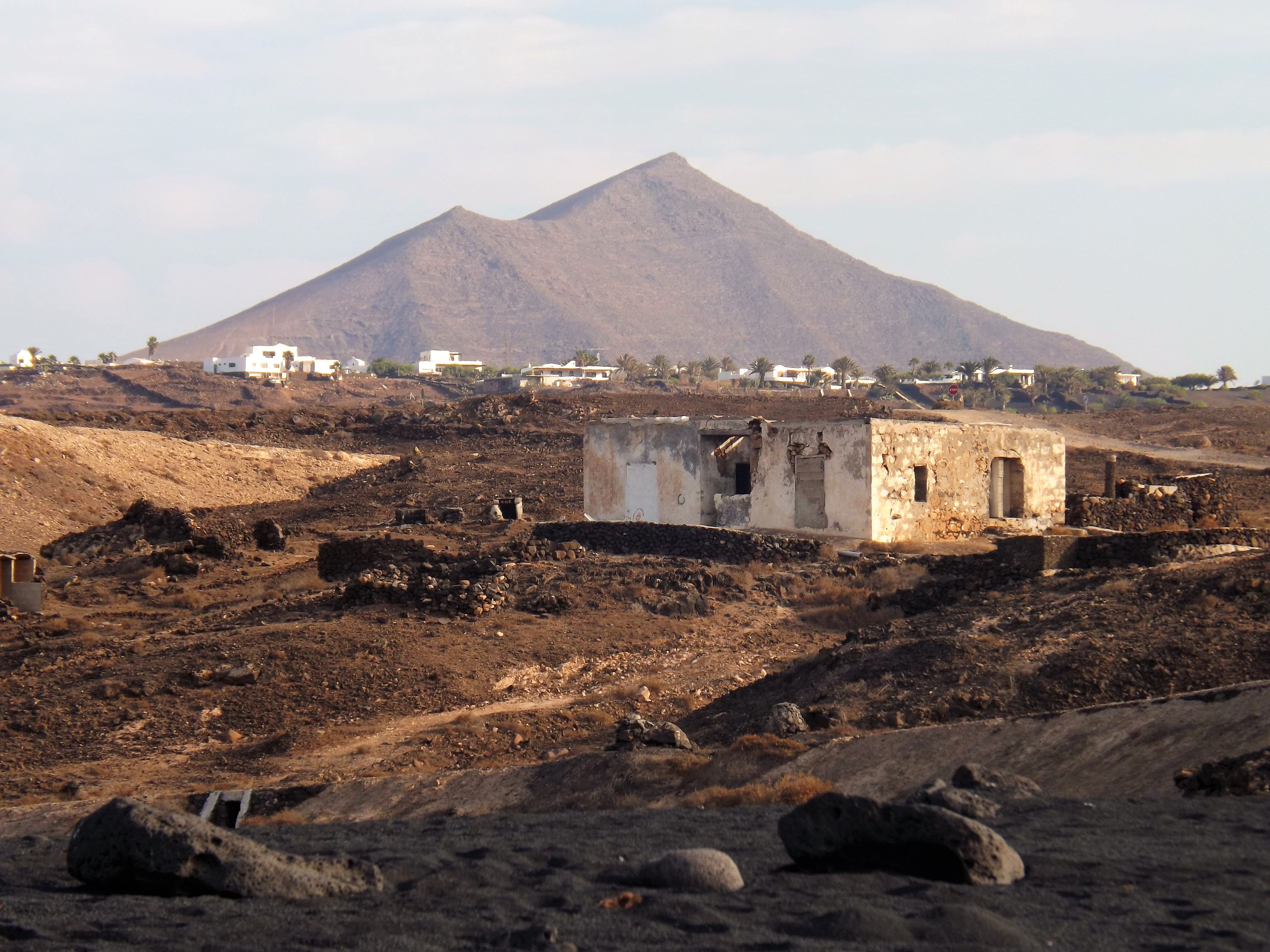
The black beach at Playa de Janubio, near Yaiza, is one of the best areas to find this gem. After parking up in a dusty carpark on the southern side of the beach we begin the short stroll the shoreline. Around us desolate buildings are all that remain of what must have been a residence of some description.
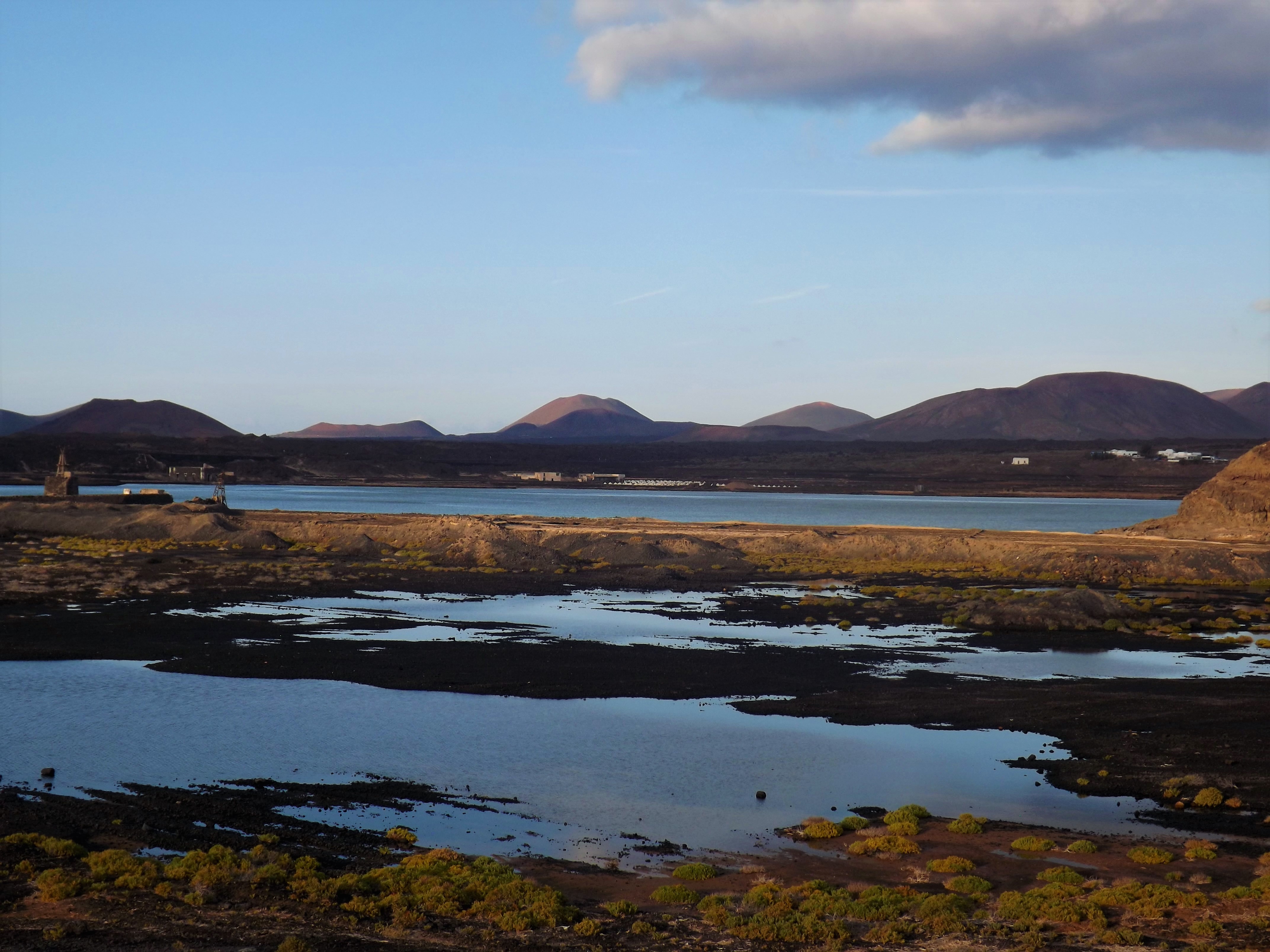
The beach is located in front of the salt works. Squinting against the bright sun it is possible to make out pyramids of salt that have recently been harvested. Large manmade square reservoirs filled with liquid of varying shades of green, yellow, ochre, blue and white shimmer in the sun. The reflection from the whitest salty pools is blinding.
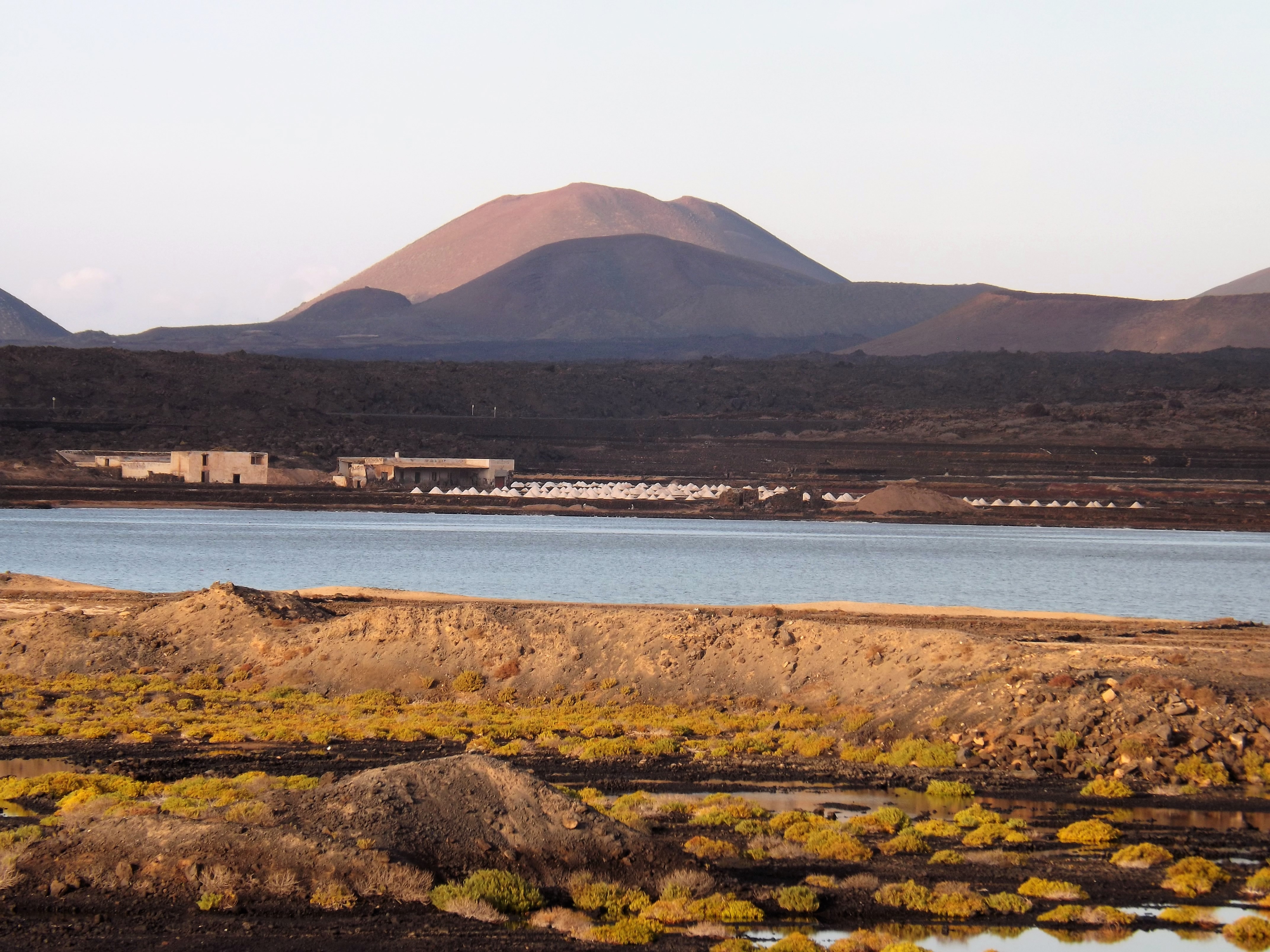
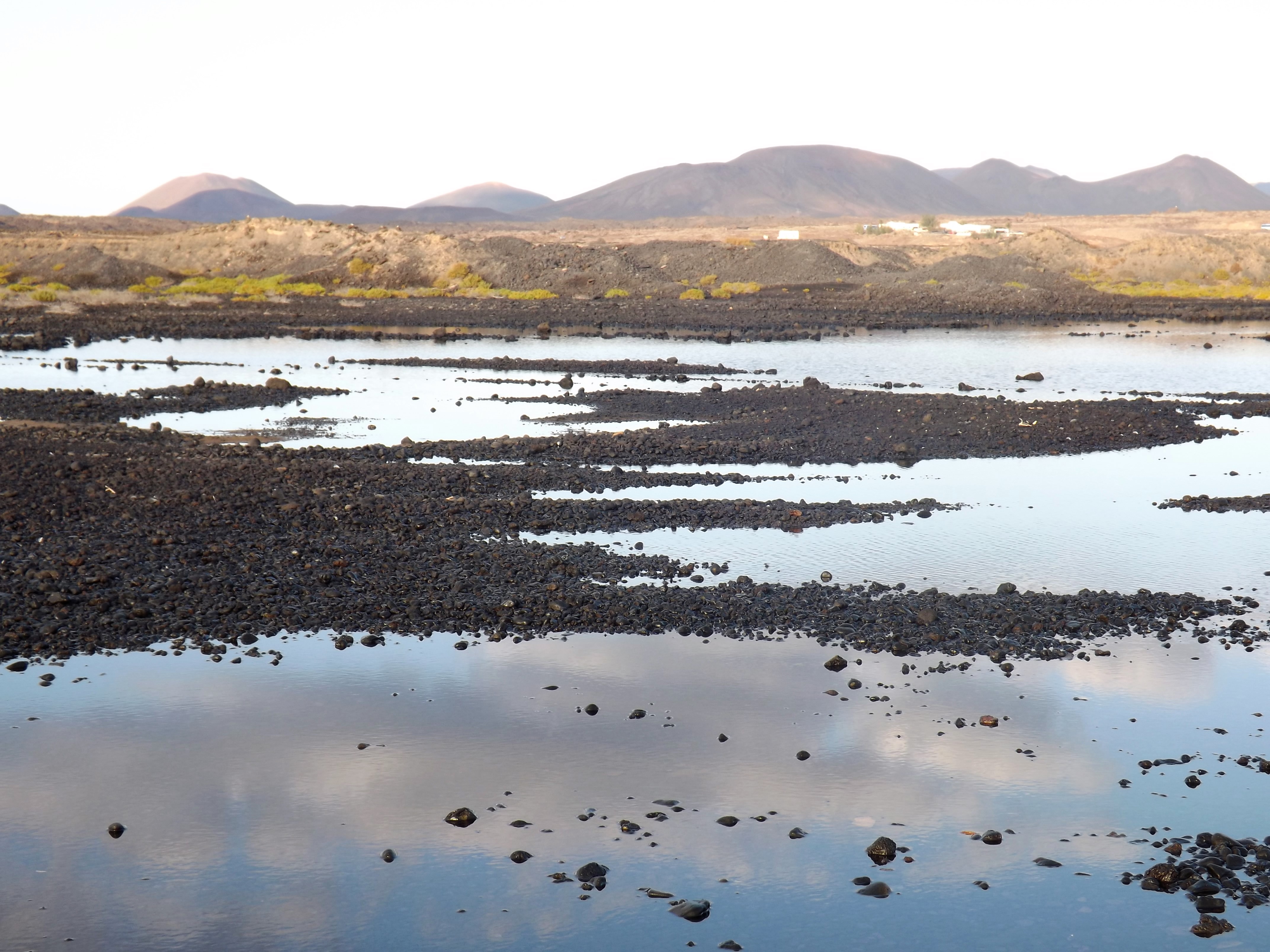
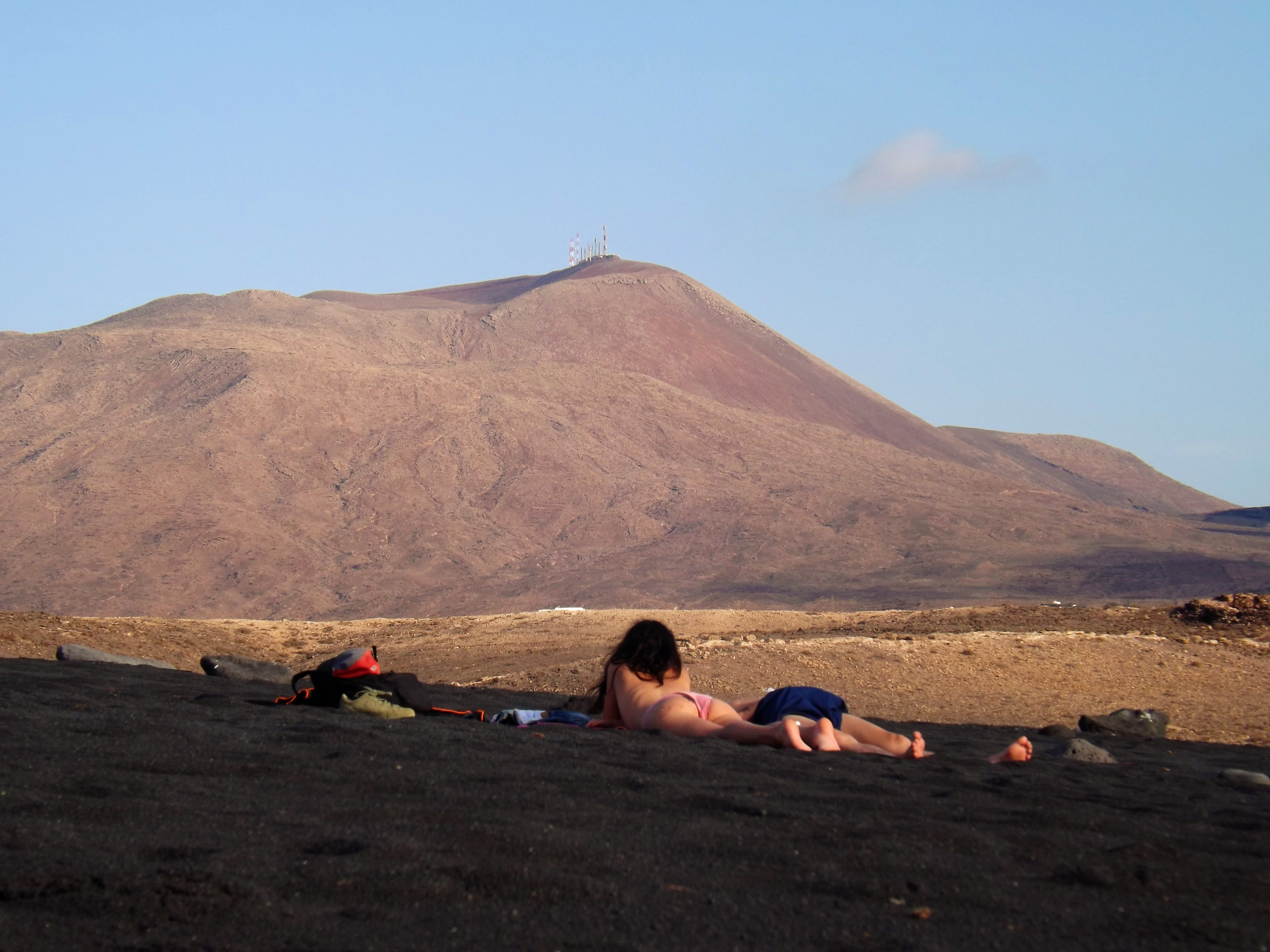
Looking inland a large lagoon and several smaller pools separate the salt works from the beach. The view is fantastic. Glowing red mountains, set afire by the late afternoon sun, black rocks and boulders, black sand, all contrast against the vivid blue sky speckled with white fluffy clouds that are reflected in small pools of salt water.
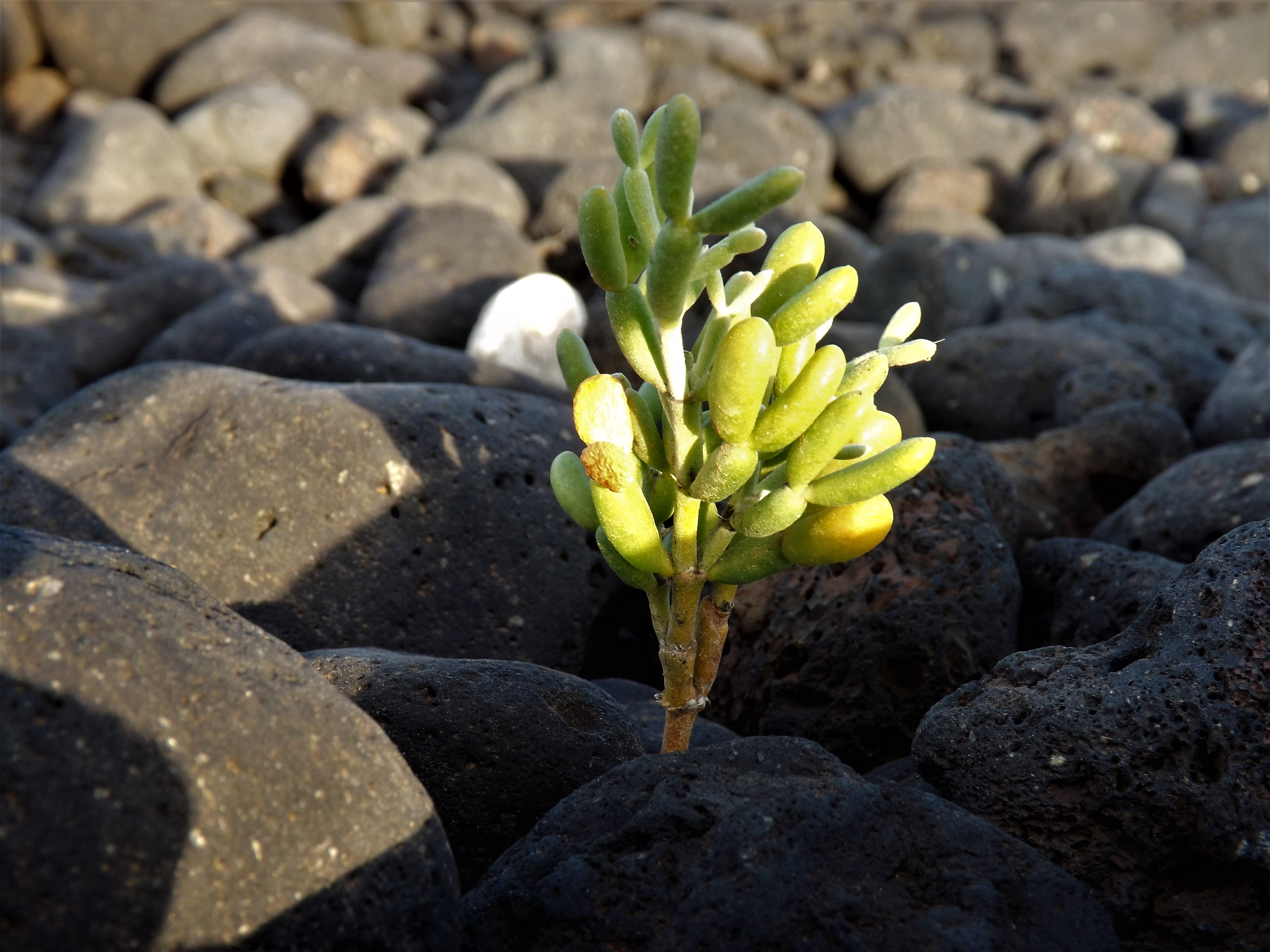
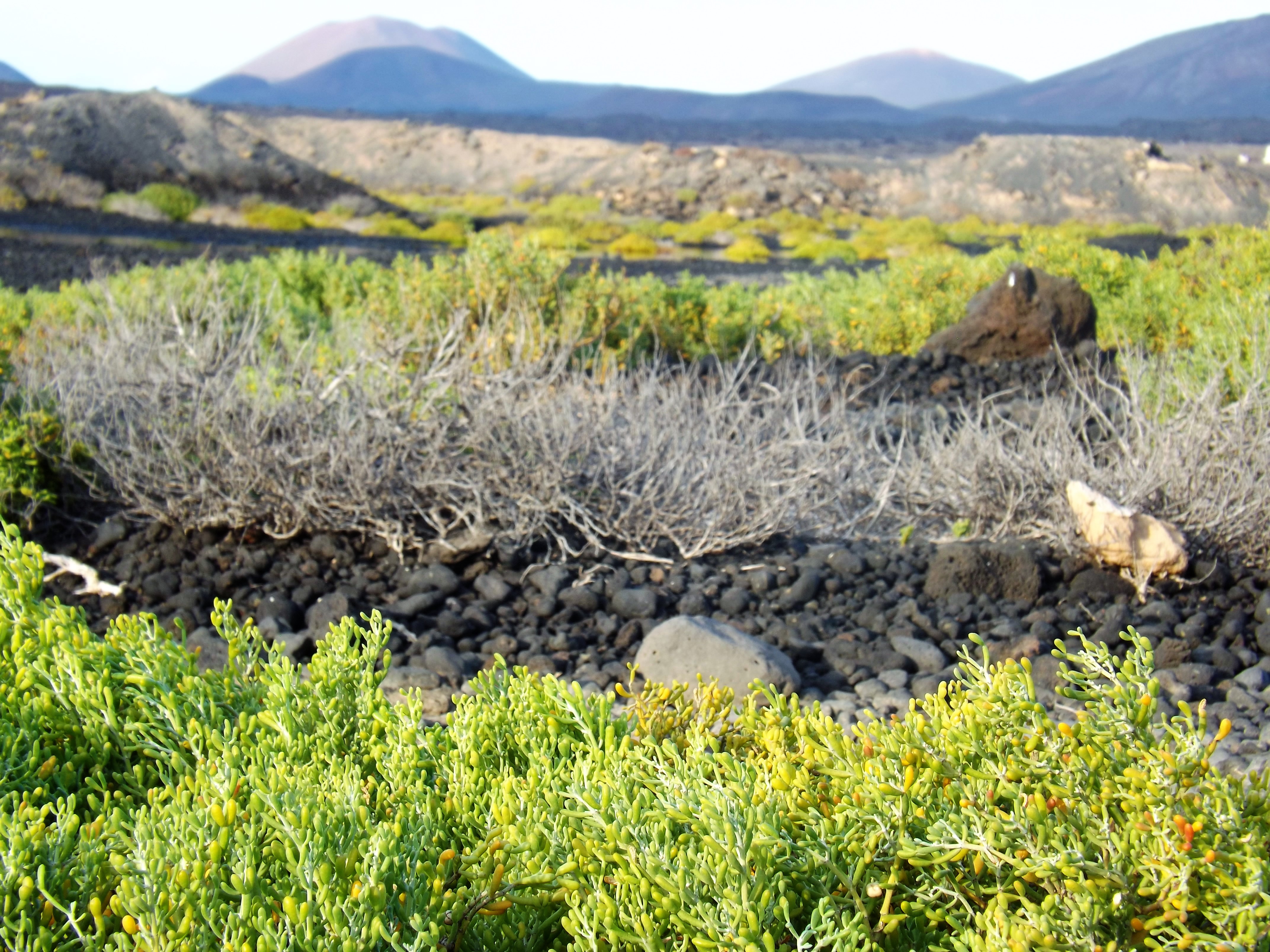
Against this background grow vibrant lime green succulents. It is hard to see how anything can grow in this salty and dusty environment, but somehow plants sprout from among the stones and position their leaves to absorb the sunlight.

 Drea MacMillan